Thai design · Milan
Eco A Mano: Thai Craft and Sustainable Furniture
Eco A Mano brought Thai furniture makers together at Slow Hand Design in Milan. Their common question was concrete: what could weaving, reused upholstery materials and workshop leftovers become when treated as the starting point for a new piece?
One show, several material routes
The Milan presentation grouped makers with different manufacturing skills. Some worked with fast-growing water plants; others looked again at leather, fabric or metal already available in their workshops. That makes Eco A Mano useful as a design example: the starting material shaped the making method and the kind of furniture each maker could offer.
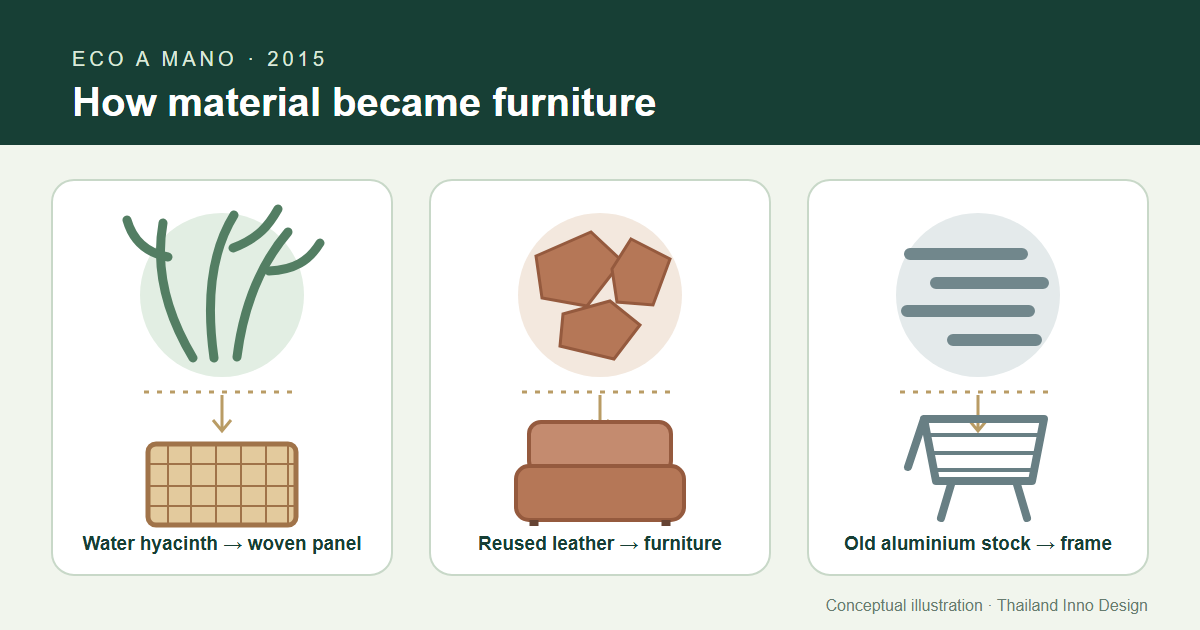
What the materials became
Water plants and weaving
Crafactor explored water hyacinth and other water-based composites. Performax brought its water hyacinth weaving skills to the furniture group. The two examples show different decisions: investigate the material itself, or apply an established craft to give it form.
Upholstery and leather
Mobella described using fabric and leather more fully during production. Palazzo made a modular furniture collection with recycled leather. One approach reduces unused material during making; the other gives previously used material a role in a new product.
Existing workshop stock
Deesawat's Love Earth pieces used production leftovers. Kun reworked older aluminium stock for outdoor furniture. These examples begin with material on hand, then ask what form and construction make sense for it.
What the examples teach
These are three different design moves, not one recipe. A plant fibre needs a suitable forming skill; upholstery production can be planned to use more of each input; leftover stock can prompt a new collection. The useful question for another furniture project is where its material comes from, which process can work it, and whether the finished form suits that material. Kenkoon and Moban also appeared in the presentation as outdoor furniture brands investigating material choices.